Training
Semi-private vs group vs 1:1 personal training: which is right for you?
Jonathan PirpichNASM-Certified Personal Trainer7 min read
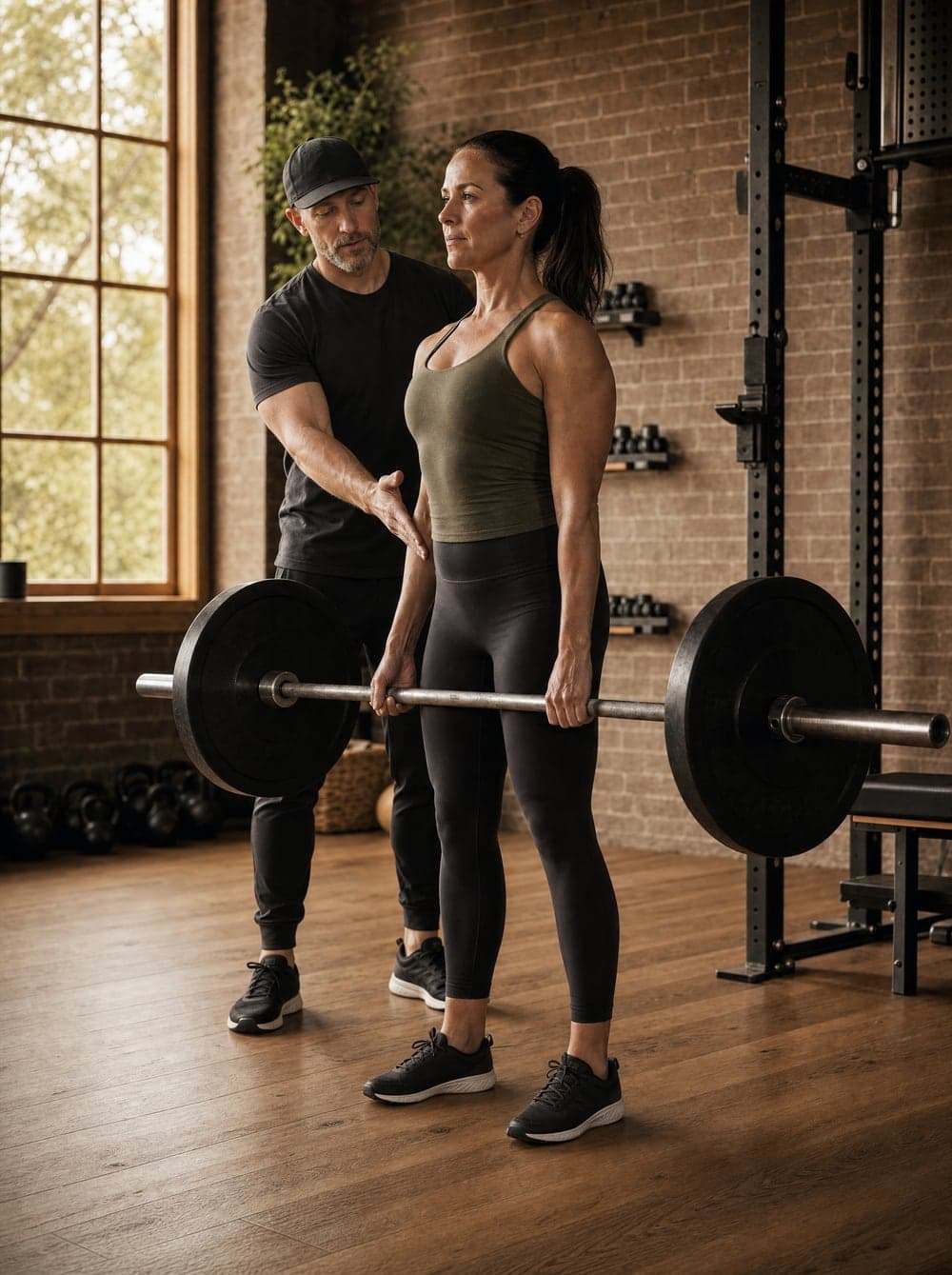
Group classes, small group, semi-private, 1:1. The fitness industry invented a lot of names, and most of them are really pricing tiers wearing training clothes. After 20 years of coaching, here is my honest breakdown of what each format actually delivers and who each one genuinely serves.
What is the difference between group, semi-private, and 1:1 training?
Group fitness is one instructor leading many people through the same workout. Semi-private is a handful of clients, usually two to four, each doing their own program with a shared coach. True 1:1 is one coach, one client, one custom program. The formats differ in three things: how customized the plan is, how much coaching attention each rep gets, and how much accountability exists between sessions.
Group classes: great community, weak customization
Orangetheory, F45, Pure Barre, bootcamps. The energy is real, the community is real, and for someone whose only goal is showing up and moving, a class beats a couch every time. The limits are structural: the workout is the same whether you are 25 or 52, postpartum or training for a marathon. Nobody is progressing your weights, nobody is watching your form by rep three of a fatigued set, and nobody calls when you stop coming. Classes are built for attendance, not adaptation.
Small group and semi-private: the honest middle
Semi-private done well is legitimately good: your own program, a coach who knows you, and a lower price because the coach's hour is shared across a few clients. It suits self-starters who lift with decent form and mostly need programming and a schedule. The trade-off is attention. With four clients mid-set at once, the coach catches the big form breaks, not the subtle ones, and coaching depth per person is a fraction of a private session.
1:1 training: maximum attention, and the format matters most when...
- You are returning after years away, postpartum, or post-injury, where form and progression need real supervision
- Your body has specific needs: perimenopause, GLP-1 muscle preservation, joint issues, a stubborn plateau
- You have tried classes and gyms for years without lasting change, which usually means the missing piece is accountability, not effort
- You value privacy: some people simply do not want to rebuild their fitness in front of an audience
The catch with 1:1 is that many gyms sell the session and nothing else. An hour of attention twice a week with no nutrition plan and no follow-up is better than a class, but it still leaves the other 166 hours of your week uncoached.
The question that actually decides it
Not which format is best, but which failure mode is yours. If you quit because working out alone is boring, community fixes that: take the class. If you show up faithfully but nothing changes, the problem is programming and progression: semi-private or better. If you start strong and quietly drop off by week four, your missing ingredient is accountability, and only coaching formats with between-session contact fix that.
How I built my studio around this
Lone Star Fitness runs 1:1 sessions inside an accountability system: custom training, a written meal plan, daily check-ins by text, and body-composition scans on Day 1 and Day 42. It is built for the third failure mode, the capable adult who does not need a cheering section, just a plan and someone who notices. If that is you, the free 6-Week Challenge is the lowest-risk way to test the format: finish it and win your $499 deposit back.