GLP-1
Keeping your muscle on Ozempic: a strength training guide
Jonathan PirpichNASM-Certified Personal Trainer9 min read
GLP-1 medications changed the weight loss conversation in my studio more than anything in my 20 years of coaching. I train several clients who are on Ozempic, Wegovy, or Zepbound under their doctor's care, and I will say clearly: for many of them, the medication has been the tool that finally made loss possible.
I will also say the part the prescribing appointment often skips: the medication decides how much you eat. It does not decide what kind of weight you lose. That part is decided in the gym and at the protein end of your plate, and getting it wrong is why so many people regain after tapering.
Do you lose muscle on Ozempic?
You can, and without strength training you likely will. When you eat in a steep calorie deficit, your body pulls from both fat and muscle. Research on GLP-1 weight loss has found that a substantial share of the total loss, in some studies from a quarter to around 40 percent, can come from lean mass when there is no resistance training or protein strategy in place. On a 30 pound loss, that could be 8 to 12 pounds of muscle gone.
Muscle is not just tone. It is your metabolic engine, your joint support, your insulin sensitivity, and in your 40s and beyond it is the difference between aging strong and aging fragile.
Why does muscle loss cause rebound weight gain?
Because when you stop the medication, your appetite returns to a body with a smaller engine. Less muscle means fewer calories burned at rest. If you lost 30 pounds but a third was muscle, you now maintain on noticeably fewer calories than before, while your hunger goes back to normal. That gap is the rebound. The people who keep GLP-1 results long term are overwhelmingly the ones who protected their muscle on the way down.
How do you protect muscle while losing weight on a GLP-1?
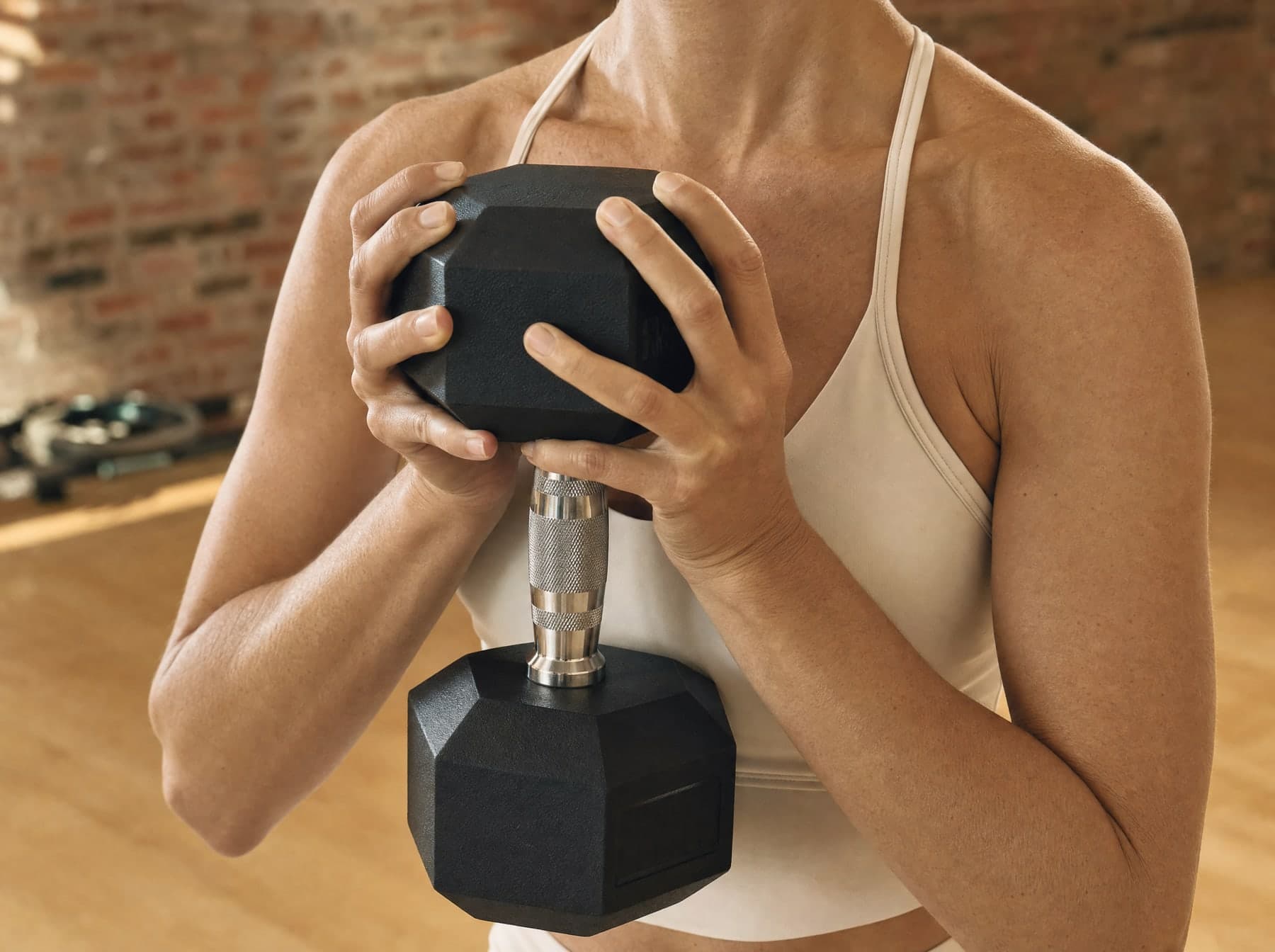
- Lift two to three times a week. Real resistance training with progressive load, not just walking. Lifting is the signal that tells your body the muscle is needed, so the deficit pulls from fat instead.
- Hit a daily protein target. This is the hard one on a suppressed appetite, so protein goes first at every meal. Most of my GLP-1 clients do best with protein-dense foods early in the day, before the appetite window closes.
- Track body composition, not just weight. The scale cannot tell fat loss from muscle loss. A Day 1 and Day 42 body-composition scan can. If lean mass is dropping fast, we adjust before it becomes a problem.
- Plan for the taper from day one. The habits that protect you after the medication, lifting, protein, and accountability, are the same ones that protect you during it. Build them while the medication makes eating discipline easy.
What about eating when you have no appetite?
This is where coaching earns its keep. A GLP-1 appetite means small portions, early fullness, and sometimes food aversions. Your meal plan has to respect that: protein-first meals, realistic portions, and no wasted stomach space on filler. I would rather a client eat four small protein-anchored meals than force one big dinner she cannot finish.
The bottom line
A GLP-1 medication can take the weight off. Strength training and protein decide whether it stays off and whether the body underneath is one you feel strong in. If you are on one of these medications in the Flower Mound area, I built a program for exactly this: GLP-1 fitness support at Lone Star Fitness. The free 6-Week Challenge includes the Day 1 body-composition scan, so you know exactly where your muscle stands before another month goes by.